Markets
Price Alerts
Log in
Sign up
Register now to claim up to $10,000 bonuses
Get Now

Aster ASTER CFD Trading

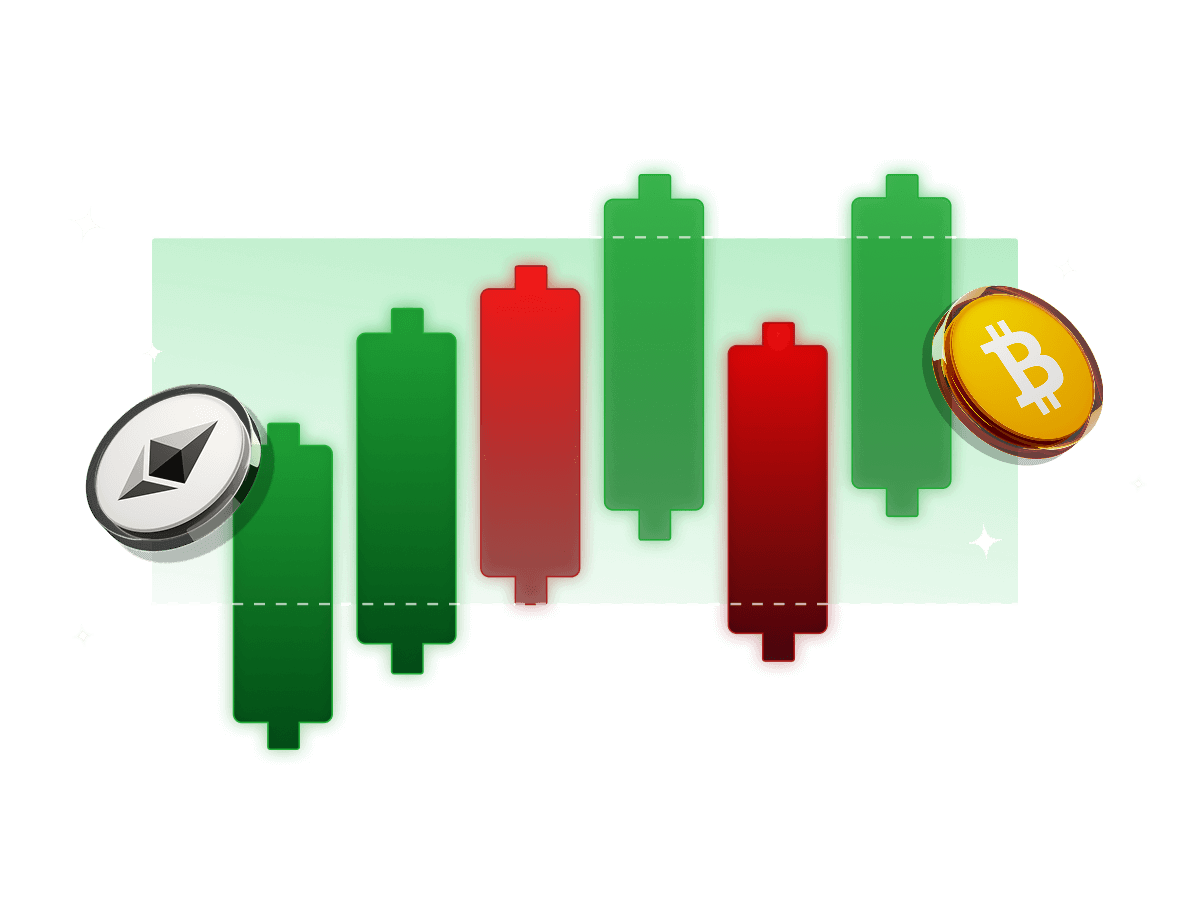
Trade 55+ Crypto Markets with Up to 100x Leverage — go long or short on Bitcoin, Ethereum & more, starting with just $10.
Start Trading
Live Demo
Crypto CFD Trading

Aster CFD Trading 101

What Is Aster ASTER CFD trading?

CFDs — Contracts for Difference — are derivatives that track asset prices without requiring ownership. When you enter a Aster CFD, you speculate on price direction. The contract settles the difference between your entry and exit price. A $2,000 Bitcoin move in your favor means a $2,000 profit (minus fees); the same move against you means a $2,000 loss.

Compared to spot trading, this model is far more streamlined. There's no wallet setup, no key management risk, and no blockchain delays to worry about. You trade purely on price, which means going short and profiting from market declines is fully available. That's a flexibility advantage spot markets simply can't match.

CFD-Style Trading Powered by Perpetual Futures

Margex delivers CFD-style trading through perpetual futures — a crypto-native contract format. The core concept is unchanged: trade with leverage based on price differences, without owning anything. However, the exchange model sets Margex apart from conventional brokers. Traditional platforms profit when traders lose, creating misaligned incentives. On Margex, trades are matched between participants — no broker in the middle, no conflict of interest. Price accuracy is ensured through a transparent funding rate refreshed every 8 hours, replacing the opaque fees typical of legacy platforms.

Advantages of Trading Crypto Derivatives on Margex

Transparent fees

See all trading costs upfront directly in the order interface.

Up to 100× leverage

Amplify your market exposure with leverage from 5x to 100x across various assets, including Bitcoin and Ethereum, while managing risk with built-in tools.

Built-in risk protection

Trade with safeguards like Negative Balance Protection and MP Shield™

Intuitive trading platform

Open and manage positions easily with a clean, user-friendly interface.

Cross-collateral trading

Open long and short positions without holding the underlying asset.

Low entry barrier

Start trading with just $10 and position sizes from $1.

Multiple crypto markets

Manage exposure across major cryptocurrencies and selected altcoins.

Bonus program

Сlaim $50 registration and deposit bonuses, plus get 50% off trading fees.
Start Trading

How Does It Work on Margex?

Placing a trade on Margex follows a clear, repeatable process. Whether you’re executing your first position or your hundredth, the workflow remains the same.
1

Choose your asset

Select from 55+ crypto/USD trading pairs. All major assets are covered: BTC, ETH, SOL, BNB, ADA, DOGE, and many more.
2

Analyze the market

Use Margex’s built-in charting tools to assess trends, support/resistance levels, and momentum before committing capital.
3

Pick your direction

Go long if you expect the price to rise. Go short if you expect it to fall.
4

Set position size, leverage, and margin mode.

Choose your leverage and margin amount. Use isolated margin to limit risks to one position, or cross margin to share collateral.
5

Define your risk parameters

Set a Stop-Loss to cap potential losses and a Take-Profit to lock in gains at your target price. Both can be set simultaneously to a single position and trigger at the set market price.
6

Open the position

Execute with a market order for instant entry, or place a limit order to enter at a specific price.
7

Manage actively

Margex lets you adjust leverage, add or remove margin, modify SL/TP levels, and partially close positions (1–99%) while they’re live.
8

Close and settle

Close your position manually or let your Take-Profit / Stop-Loss trigger automatically. Your P&L settles instantly to your wallet.

Going Long vs. Going Short: How to Profit on Any Market

One of the defining advantages of derivative trading over spot markets is the ability to profit in both directions.

Buy the Rally

Long Position

Go long when you expect the price to increase - in bullish conditions, positive news, and breakout patterns.

AssetBTC/USD
Entry$60,000
Margin$200 (25x)
Exposure$5,000
BTC moves+5% → $63,000

Profit+$250 (+125%)

Profit the Drop

Short Position

Go short when you expect the price to decrease - during corrections, bear markets, or to hedge spot holdings.

AssetETH/USD
Entry$3,000
Margin$150 (20x)
Exposure$3,000
ETH moves+5% → $2,850

Profit+$150 (+100%)

Which Cryptocurrencies Can You Trade on Margex?

Trade 55+ crypto pairs with leverage. Explore dedicated guides for each asset and learn the best CFD strategies per market.
Bitcoin CFD
Bitcoin CFD
BTC/USD
Ethereum CFD
Ethereum CFD
ETH/USD
Solana CFD
Solana CFD
SOL/USD
BNB CFD
BNB CFD
BNB/USD
Dogecoin CFD
Dogecoin CFD
DOGE/USD
Cardano CFD
Cardano CFD
ADA/USD
Chainlink CFD
Chainlink CFD
LINK/USD
TRON CFD
TRON CFD
TRX/USD
Bitcoin Cash CFD
Bitcoin Cash CFD
BCH/USD
Hyperliquid CFD
Hyperliquid CFD
HYPE/USD
WBTC CFD
WBTC CFD
WBTC/USD
Monero CFD
Monero CFD
XMR/USD
Avalanche CFD
Avalanche CFD
AVAX/USD
Litecoin CFD
Litecoin CFD
LTC/USD
Start Trading

Fees and Costs: What You Pay When Trading on Margex

0.019% (for LIMIT orders)

Maker fee

0.060% (for MARKET orders)

Taker fee

~−0.12%

Funding Rate

Frequently Asked Questions (FAQ)

What is Aster CFD trading?

It's a form of derivatives trading based on cryptocurrency price speculation through contracts rather than coin ownership. Your P&L reflects the gap between your opening and closing prices. With a Aster CFD, you get leveraged exposure, short-selling access, and no wallet requirement.

How does Aster CFD trading work?

Here's how it works in practice: you believe ETH will climb from $3,000. You put up $200 margin at 25x leverage on Margex, creating a $5,000 exposure. ETH rises 8% to $3,240, netting you $400 — a 200% gain on margin. Leverage cuts both ways though: an 8% fall results in a $400 loss.

What is the difference between a CFD and buying crypto?

On a spot exchange, you purchase and hold actual cryptocurrency in a wallet. With a contract for difference, you're trading on price alone — no coins, no wallet needed. CFDs unlock leverage and short positions; spot ownership grants access to DeFi, staking, and direct payment use cases.

What leverage is available on Margex?

With Margex, leverage ranges from 5x to 100x depending on asset type and market conditions. Major cryptocurrencies like Bitcoin and Ethereum support the highest caps. Other assets offer adjusted limits. You can update leverage on any open position in real time.

What are the best cryptocurrencies for CFD trading?

BTC and ETH dominate due to their liquidity depth and wide leverage availability. SOL and BNB offer the volatility swing traders look for. Speculative traders often target DOGE and PEPE. Your ideal choice comes down to strategy, risk comfort, and current market conditions.

How is Margex different from a traditional CFD broker?

Three distinctions define Margex versus a standard CFD broker. One: Margex is an exchange, not a counterparty — no conflict of interest. Two: fees are transparent at 0.019%/0.060%, with no variable spread markups. Three: unique platform features including staking collateral, copy trading, and MP Shield anti-manipulation tech.

How is profit and loss (P&L) calculated?

Your profit and loss (P&L) in crypto CFD trading measures how your position is faring as prices move in the market. The end result is determined by a combination of factors: your position size, leverage used, changes in market price, and the costs of trading. Margex presents P&L using two separate indicators: Realized P&L and Unrealized P&L. Unrealized P&L reflects the hypothetical profit or loss on an open position, based on the difference between the opening price and the current market price. It is updated in real time so you can follow position performance as the market evolves. For example, for a Long position: Unrealized PnL (Long) = MarginCol × Leverage × (CurrentAsk – OpenPrice) / OpenPrice The final result of a trade is also shaped by the trading costs you incur, including fees and funding payments, which are accounted for in the Realized P&L figure. For more information on P&L and how it's calculated, see our corresponding Help-Center articles.

What is a margin call in crypto CFD trading and when does it trigger?

A margin call is an alert indicating that your margin balance is nearly exhausted and your position is approaching liquidation. In leveraged trading, margin acts as the collateral that underpins your open trades. If adverse price movement reduces your remaining margin below the maintenance requirement, the platform may send a margin call. This is a reminder that you might need to add more funds to sustain your position. Margex provides traders with built-in risk management tools to handle volatile conditions, such as margin adjustments and protective Stop Loss and Take Profit orders. If no corrective steps are taken and losses escalate, the position could eventually hit its liquidation price.

How is my liquidation price calculated?

Your liquidation price is the price point at which your remaining margin becomes inadequate to keep an open position alive. At that moment, the trading platform steps in and closes the position automatically to halt additional losses. What determines the liquidation price is a combination of factors: your entry price, margin amount deposited, position size, trading fees incurred, and funding payments. The formulas applied are: Liq Price (Long) = OpenPrice − (Margin − OpenOrderCommission − CloseOrderCommission − Funding) / PositionSize × OpenPrice Liq Price (Short) = OpenPrice + (Margin − OpenOrderCommission − CloseOrderCommission − Funding) / PositionSize × OpenPrice It is worth noting that fees and funding charges both factor into the liquidation calculation and therefore influence how close your position gets to forced closure. Managing your margin proactively and applying leverage thoughtfully can reduce your risk during market volatility. For more information on how the Liquidation Price is calculated, see our corresponding Help-Center articles.

Community

Margex Platform

Margin Trading

Copy Trading

Markets

Price Alerts

Referral Program

Buy Crypto

Staking

About

About Margex

All Trading Assets

Security

Career

Contact Us

Help Center

Fees

Blog

Trading Guide

Quick Start Guide

How to Buy Bitcoin

How to Make a Deposit

Leverage Trading and Margin

Trading on Margex

Order Types

Video Tutorials

Blog

For Beginners

News

Price Predictions

Technical Analysis

Trading

Our Best Articles

Other

Cross Margin vs Isolated Margin

Crypto Futures Trading

How to Short Crypto

Special Offers

Our Best Articles

Margex Competitions Are Live — Predict Prices, Beat the Market, and Win

Margex Is Giving Away $3,000,000 in SUI Tokens — Here's How to Claim Yours

Margex Launches Rewards Hub — Earn Bonuses for Every Trade

Margex New Token Listings: ZEC Now Live

Margex New Token Listings: SUI Now Live

Crypto Scams Explained: How Social Engineering Tricks Users

Margex Expands Trading Options: New Token Listings — XMR Now Live

AI-Powered Crypto Scams: How Scammers Use AI for Crypto Fraud

Other

Cross Margin vs Isolated Margin

Crypto Futures Trading

How to Short Crypto

Cookie policyStaking termsPrivacy policyTerms of serviceCopy trading termsReferral program terms

Risk Warning

These website products and services are provided by Margex Trading Solutions Ltd. Margex does not provide services to residents of certain jurisdictions including the United States of America, the Republic of Seychelles, Bermuda, Cuba, Crimea, Sevastopol, Iran, Syria, North Korea, Sudan, and Afghanistan. Please note that cryptocurrencies, cryptocurrency leveraged products, and other products and services provided by Margex Trading Services Ltd involve a significant risk of financial losses. It is not suitable for all investors and you should make sure you understand the risks involved, seeking independent advice if necessary. You are solely responsible for complying with all applicable laws related to Your trading activities including without limitation any reporting obligations and payment of all applicable taxes in a jurisdiction(s) in which You may be liable to pay tax.